What is baby-led weaning (and why is it so messy)?
Baby-led weaning is an approach to introducing solids where babies largely self-feed soft, appropriately sized finger foods instead of relying only on spoon-fed purées. The upside: sensory learning, motor skills, and family-meal participation. The downside everyone whispers about: food becomes a full-body craft project.
Mess isn’t a bug—it’s a feature of learning. Your job isn’t to eliminate every crumb. It’s to build a setup where mess stays in a defined zone so you can stay present (and finish your own coffee before it’s cold).
Before you start: readiness checklist
Most babies are ready for solids around 6 months, but look for skills—not just age:
- Sits upright with minimal support
- Good head and neck control
- Shows interest in your food (reaching, watching intently)
- Lost the strong tongue-thrust reflex that pushes everything out
Always follow your pediatrician’s guidance—especially for allergies, growth concerns, or medical history. This guide is about mess management and mealtime setup, not medical advice.
Build a mess-smart mealtime zone
Think of BLW like painting: you don’t ban paint—you put down a drop cloth. Same idea for solids.
1. Claim the floor space (without plastic tarp vibes)
A washable mat under the high chair catches the “gravity experiments.” Skip anything you’ll trip over every day. A simple wipeable floor mat—or even strategically placed towels for early weeks—beats scrubbing grout after every meal.
2. Upgrade the tray surface
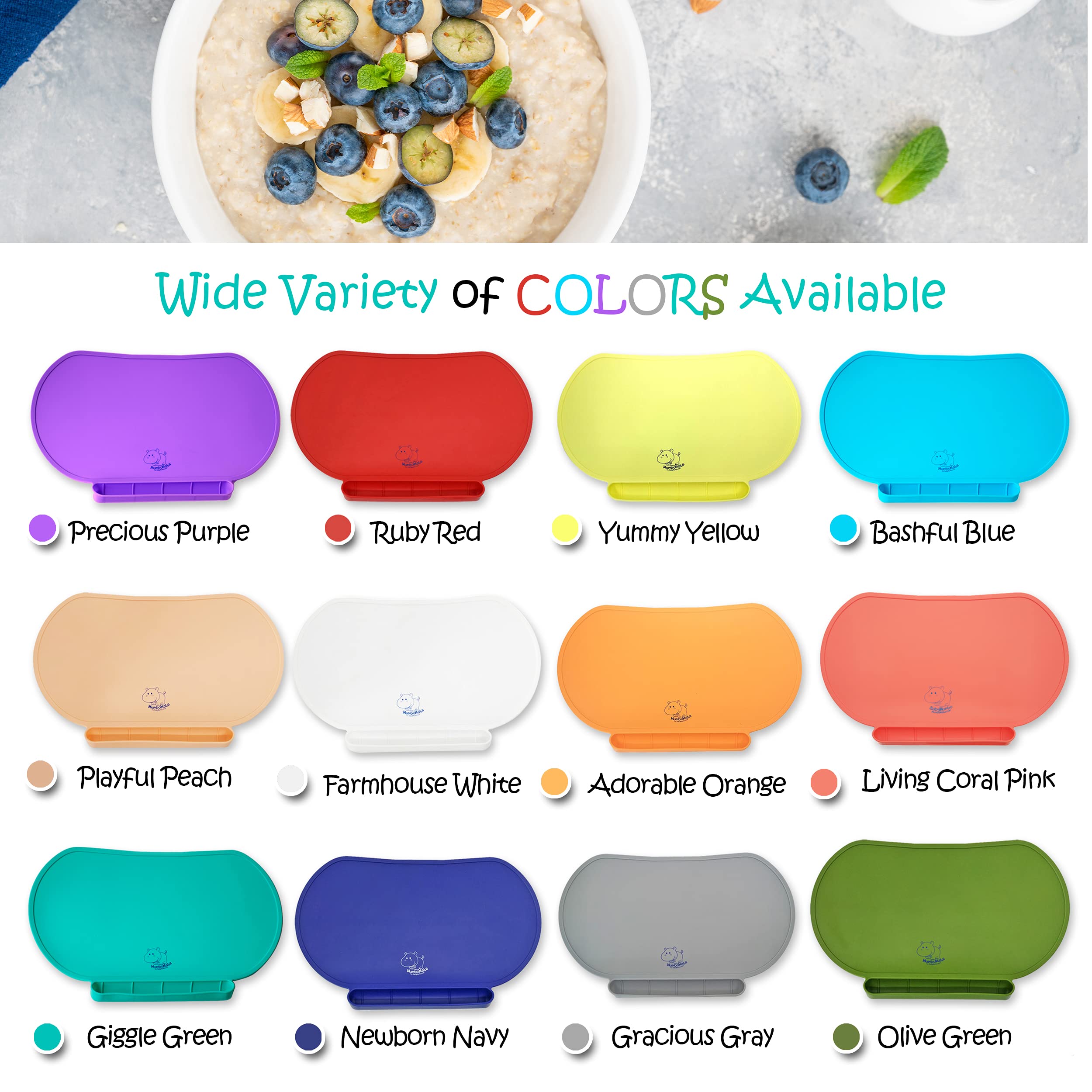
High chair trays are notoriously hard to deep-clean around edges and hinges. An easy to clean high chair mat made of food-grade silicone creates a smooth, wipeable layer that contains liquids and soft solids. Look for raised edges (so yogurt doesn’t migrate) and a design that still lets little hands reach food comfortably.
3. Dress for the occasion
A full-coverage bib with sleeves (or a long-sleeve smock) saves outfits. Keep a dedicated “meal shirt” if laundry day is already chaotic. Expect some food in hair—keep a soft washcloth nearby for post-meal face and fingers.
4. Pre-portion, don’t over-plate
Put out 2–3 foods at a time. Overloading the tray increases tossing. Refill when curiosity (or appetite) asks for more. Smaller servings = less airborne banana.
Baby-led weaning essentials that actually reduce cleanup
You don’t need a specialty store haul. A short list of baby-led weaning essentials goes further than a cart full of gadgets:
- Stable high chair with foot support when possible (better posture, less sliding)
- Silicone placemat with raised edges—ideally with a spill-catching tray at the front edge
- Open cup or straw cup for water practice (start with tiny amounts)
- Soft-tipped spoon for thicker foods they can dip or you can offer load-and-hand-over style
- Travel-friendly toddler placemat that rolls into the diaper bag for restaurants and grandparents’ houses
- Wet bag or zip pouch for the mat and bib on the go
Food ideas that are BLW-friendly (and less explosive)
Soft, graspable shapes beat tiny crumbs early on. Think “finger-length sticks” of soft cooked veg, ripe fruit spears, shredded soft meats, or toast strips with thin spreads. Avoid hard raw veggies, whole nuts, popcorn, and round firm foods that pose choking risks—cut appropriately and stay within arm’s reach.
Sauce strategy matters: serve dips in a small silicone portion cup on the mat rather than flooding the tray. Thick foods stay put better than thin watery soups at the beginning.
A realistic cleanup routine (under 5 minutes)
- Hands and face first while baby is still seated—then lift out.
- Shake crumbs from the placemat into the trash or compost.
- Wipe the mat or drop it in the dishwasher if it’s food-grade silicone and dishwasher-safe.
- Quick floor sweep of the under-chair zone—don’t deep-clean the whole kitchen every meal.
- Reset bib and mat so the next meal doesn’t start with scavenger-hunt energy.
Consistency beats perfection. A “good enough” reset after breakfast makes lunch feel possible.
Why silicone beats plastic & fabric for BLW
Fabric placemats absorb spills and join the laundry mountain. Hard plastic sheets slide, crack, or leave gaps where liquid sneaks underneath. Food-grade silicone stays flexible, grips surfaces without suction cups, and shrugs off heat and dishwashers. Raised edges create a real containment zone—especially useful when drinks tip during enthusiastic chewing.
If you’re comparing options, prioritize: food-grade silicone, raised perimeter, dishwasher-safe care, portable size (~17" × 10.5" fits most trays), and any feature that catches food at the table edge before it hits the floor.
Eating out and travel without the chaos spiral
Pack a travel-friendly toddler placemat, a bib, and a small pack of wipes. Wipe the restaurant high chair tray, lay down your mat, and you’ve instantly improved hygiene and cleanup. After the meal, rinse or wipe the mat, roll it, and stash it. Same routine at daycare drop-off mornings or grandma’s house—familiar gear reduces toddler protests and parent stress.
Mindset shifts that make BLW sustainable
- Mess means learning. Touching food is data collection for a developing brain.
- You can still offer help. BLW isn’t all-or-nothing; many families mix self-feeding with occasional spoon assists.
- Protect your energy. Containment tools aren’t “giving up”—they’re how you keep showing up cheerfully.
- Progress isn’t linear. Some weeks are neat; some weeks look like modern art. Both are normal.
Quick FAQ
Will a placemat stop all mess?
No product replaces supervision or floor protection entirely. A good mat dramatically reduces table spread and edge-drop disasters, which is where most daily frustration lives.
When should I introduce cups and utensils?
Early and low-pressure. Offer a small open cup with water at meals; keep spoons available for dipping. Skills build with repetition, not perfection.
How do I keep silicone smelling fresh?
Wash promptly, use hot water or the dishwasher, and occasional baking soda paste for stubborn odors. Avoid abrasive scrubbers that rough up the surface.
The bottom line
Mess-free baby-led weaning isn’t about a spotless kitchen—it’s about a setup that makes exploration feel doable on a Tuesday night. Define the zone (floor + tray), choose wipeable materials, serve smaller amounts, and keep a short cleanup ritual. That’s how BLW stays joyful instead of becoming another chore you dread.